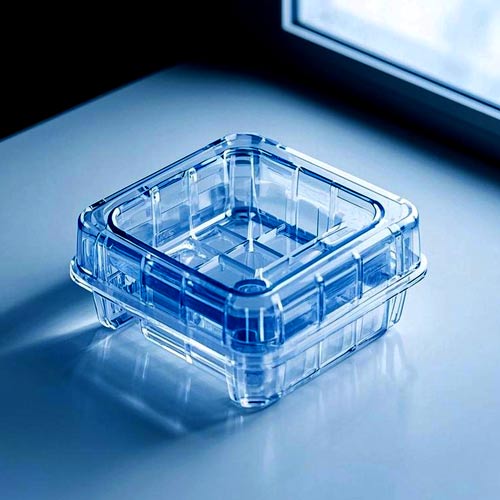
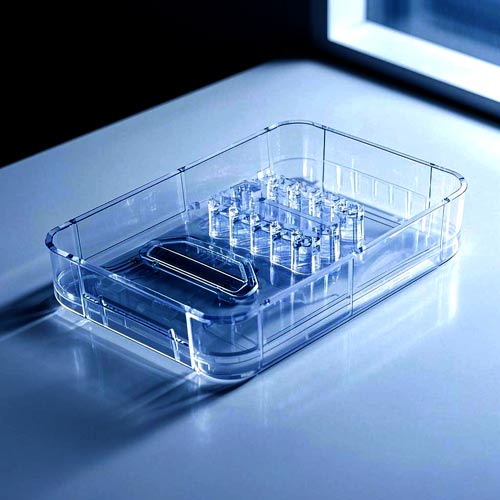
Imagine holding a crystal-clear acrylic photo frame in your hand or wearing stylish acrylic glasses. Their appearance and texture are truly appealing. These exquisite items are all made of acrylic plastic, also known as acrylic. So, here comes the question: Can acrylic plastic, like "plasticine," be transformed into various wonderful shapes through injection molding? The answer is yes! And this process is just like a magic show full of surprises. Let's find out more!
Acrylic plastic (PMMA, polymethyl methacrylate) can be regarded as the "crystal beauty" in the plastic world. It has a light transmittance as high as 92%, which is even clearer than glass, and it only weighs half as much as glass. It's truly a combination of "beauty and lightness." It also has excellent chemical stability and strong weather resistance, and it's not easy to turn yellow or become brittle. Even after being exposed to the sun for many years, it can still maintain its "high appearance level."
In daily life, acrylic plastic is everywhere: the sparkling display boards in shopping malls, the tail light covers of cars, the watch faces of high-end watches... The molding of these products is inseparable from the injection molding process. But don't think that you can succeed just by putting acrylic plastic into an injection molding machine. This "crystal beauty" has a bit of a "temper." To tame it, you need to master some special skills!
The melting point of acrylic plastic is between 160 - 180°C. If the temperature is too low, it's like a "stubborn stone" and can't flow for molding. If the temperature is too high, it will "lose its temper" instantly, decompose and carbonize, and change beyond recognition. It's just like giving it a hot spring bath. If the water temperature is too cold, it won't have any effect, and if the water temperature is too hot, it will be "scalded." Moreover, during the injection molding process, the temperatures of the barrel, nozzle, and mold all need to be precisely controlled. A slight deviation will cause defects such as bubbles and silver streaks in the produced parts. It's truly a case of "a miss is as good as a mile"!
In the molten state, acrylic plastic has a relatively high viscosity, just like thick jelly. It's not easy to make it flow smoothly in the runner and cavity of the mold. If the mold design is unreasonable, for example, if the runner is too thin and the gate is too small, it will "get stuck," resulting in insufficient material in the part and incomplete filling, as if there is a "plastic strike."
Due to the relatively small shrinkage rate of acrylic plastic (about 0.2% - 0.8%) and its tendency to adhere to the mold surface, if the demolding operation is not carried out properly, it's like forcefully separating a pair of "reluctant lovers." The part may be strained, deformed, or even "shattered," resulting in all previous efforts being wasted.
Barrel Temperature: Set the barrel temperature between 170 - 200°C and use a segmented heating method. For example, the temperature at the end near the hopper is slightly lower (170 - 180°C) to prevent the plastic from melting prematurely, and the temperature at the end near the nozzle is slightly higher (190 - 200°C) to ensure the smooth extrusion of the plastic, just like giving the plastic a "gradual warm journey."
Mold Temperature: Keep the mold temperature at 40 - 80°C and precisely control it using a mold temperature controller. An appropriate mold temperature can allow the plastic to cool slowly, reduce internal stress, and prevent the part from deforming, just like giving the plastic a "gentle embrace."
Increase the Size of the Runner and Gate: Design the diameter of the main runner to be 8 - 12mm, the diameter of the sub-runner to be 6 - 10mm, and the thickness of the gate to be 80% - 100% of the wall thickness of the product, so that the molten acrylic plastic can flow unobstructed into the mold cavity, just like on a wide highway.
Reasonably Set the Vent Grooves: Open vent grooves with a depth of 0.02 - 0.05mm at the parting surface of the mold, the corners of the cavity, and other positions to timely discharge the gas generated during the filling process of the plastic and prevent problems such as bubbles and trapped air, just like installing "breathing holes" for the mold.
Use a Release Agent: Select a special acrylic release agent and evenly spray it on the mold surface to form a thin "isolation film," allowing the part and the mold to separate easily, just like putting a "smooth coat" on the mold.
Optimize the Demolding Structure: Adopt appropriate demolding methods such as push plate demolding and ejector pin demolding, and control the demolding speed to avoid pulling the part when the speed is too fast. At the same time, polish the mold surface to reduce the surface roughness and make the demolding of the part smoother.
A lighting factory wants to produce a transparent acrylic lampshade. First, dry the acrylic plastic granules at 80 - 90°C for 4 - 6 hours to remove moisture and prevent the generation of bubbles during molding. Then, set the barrel temperature of the injection molding machine as follows: the first section is 175°C, the second section is 185°C, the third section is 195°C, the nozzle temperature is 200°C, and the mold temperature is 60°C.
In terms of mold design, the diameter of the main runner is 10mm, the diameter of the sub-runner is 8mm, and a side gate is adopted with a gate thickness of 2mm. During the production process, the molten acrylic plastic, under precise temperature control, fills the mold cavity quickly and evenly along the spacious runner. After the part cools down, use the push plate for demolding, and a crystal-clear and flawless lampshade is born!
Acrylic plastic can not only be transformed into lampshades through injection molding but also into various products such as mobile phone cases, bathroom supplies, and optical lenses. As long as you master the correct methods, this "crystal beauty" in the plastic world can be turned into any shape you want under the magic of injection molding! The next time you see an exquisite acrylic plastic product, you might as well think about this wonderful "transformation magic show" behind it!


