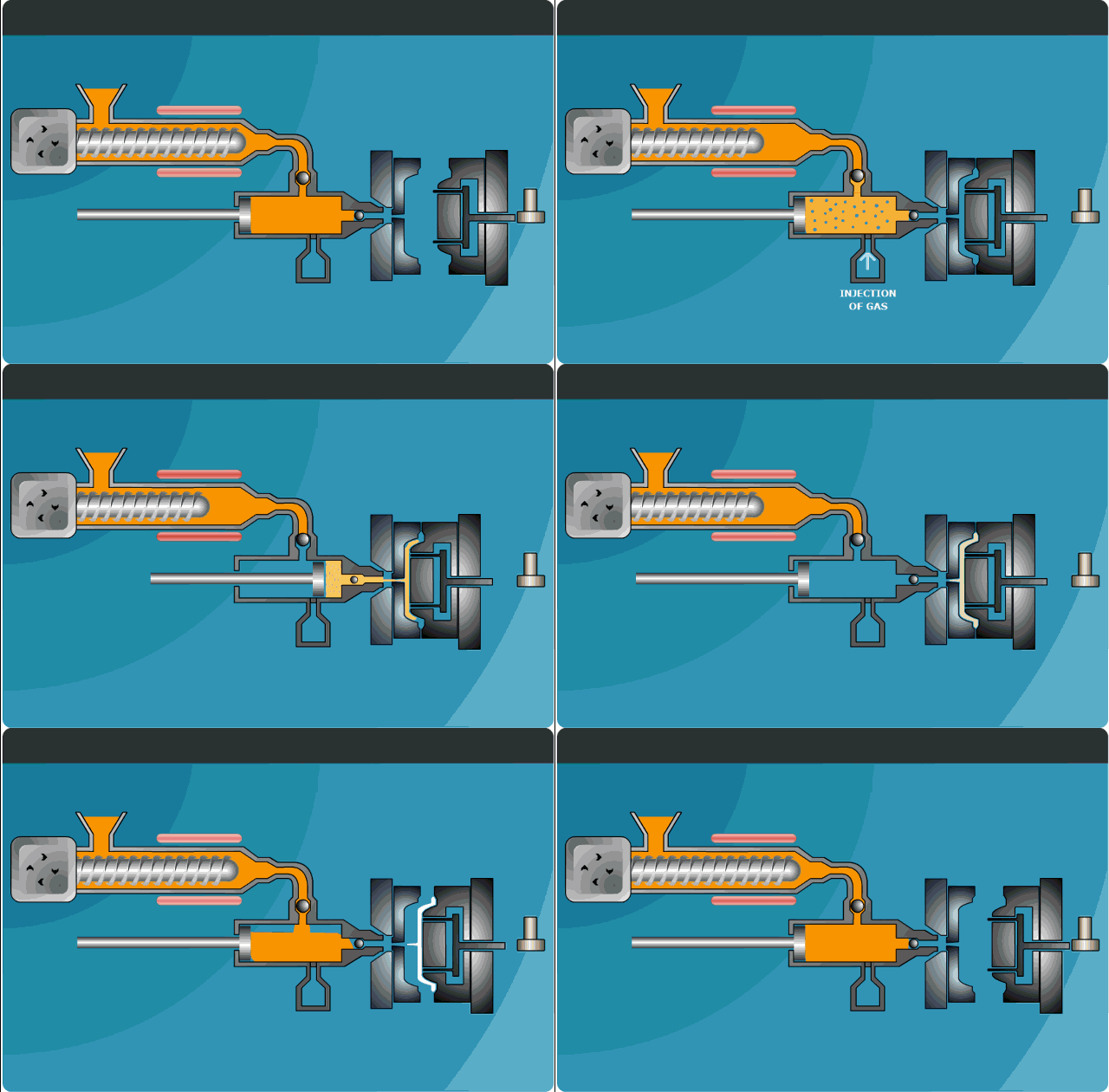
Did you know that the barrel of an injection molding machine is like a "plastic digestor," and its "stomach capacity" (barrel capacity) determines how much plastic it can "hold" at one time, directly affecting the production efficiency and product quality of injection molding. If the barrel is too small, it may "starve" and fail to fill the mold, leading to injection molding defects; if it is too large, it may "overload," causing plastic to 滞留 (stagnate) and degrade. Today, let’s explore how to conduct a precise "stomach capacity check" for the barrel of an injection molding machine!
Barrel capacity refers to the volume of plastic that the screw or plunger of an injection molding machine can hold in the barrel (usually measured in cubic centimeters, cm³), and when converted to weight, it is commonly known as the "shot weight" (in grams, g).
Core Formula:Barrel Capacity=Cross-sectional Area of Barrel Inner Diameter×Maximum Screw Stroke
Using a dining analogy: the inner diameter of the barrel is like the "diameter of a bowl," and the screw stroke is like "how far a spoon can reach"—multiplying these two gives the "maximum food capacity" of the bowl, which is also a fundamental parameter for injection molding machine processing.
Method: Use a vernier caliper to measure the inner diameter of the barrel (note: measure the internal diameter, not the external diameter!), which is the foundational data for calculating the barrel capacity of an injection molding machine.
Convert to Shot Weight (g): With a plastic density of ≈1.05 g/cm³ (taking ABS as an example), the shot weight = 423.9 × 1.05 ≈ 445 g.
This data directly impacts whether the injection molding process can accurately fill the mold, avoiding material shortages or waste.
Issue: Inadequate molten material to fill the mold, leading to "short shot" defects (missing corners or incomplete parts), which directly affects the yield rate of injection molding.
The barrel capacity should be 10%-20% larger than the single injection volume (part + runner weight), a key principle for balancing efficiency and quality in injection molding.
Calculating the barrel capacity is like customizing a "diet plan" for an injection molding machine—eating too little causes starvation, while overeating harms performance. Mastering the three-step method of "measuring the waist, calculating the area, and checking the stroke" can not only prevent short shot defects in injection molding but also avoid plastic degradation, keeping the injection molding machine in optimal "appetite."


